
What to Expect on Interior Painting Day: Prep, Protection, and Cleanup
· By Efrain Maria
If you have never hired a painter before, it is normal to wonder what the days will actually look like. How much do you need to move? Will there be dust? Can you stay home? Will your floors be safe?
Here is how a typical interior painting job runs, based on how we work in homes around Lowell, Chelmsford, Westford, and the surrounding towns. Every house is a little different, but the order of the work is mostly the same, and knowing it ahead of time makes the whole thing easier.
Before the first day: what you can do
Take pictures, mirrors, and wall decorations down, and remove small items from shelves and tables in the rooms being painted. Empty closets you want painted. Put away anything fragile or valuable. That saves time on the job and keeps your things safe.
Large furniture does not usually need to leave the room. It gets moved to the center and covered. If there is something very heavy, very valuable, or delicate, like a piano or an antique, mention it at the estimate so there is a plan.
Think about pets and kids. Paint and wet surfaces do not mix well with curious paws and hands, so it helps to plan where they will be while each room is being worked on.
Protection: floors, furniture, and fixtures
The first thing the crew does is protect the room. Floors get covered with drop cloths, and furniture in the middle of the room gets covered with plastic. Outlet and switch covers come off so paint goes on clean around them. Light fixtures and anything that stays on the wall get covered or taped.
Good protection takes time, and it is time well spent. A painter who rushes this step is the one who leaves paint on your hardwood or your countertop.
Prep: the part most people do not see
Next comes prep. Nail holes and small dents get filled. Cracks get patched, and any larger drywall damage gets repaired. Patched areas are sanded smooth and spot primed so they do not show through the finish. Gaps between trim and walls get caulked so the edges look clean.
On older homes with plaster or glossy old paint, there may be more sanding or a bonding primer to help the new paint stick. Sanding does create some dust, so it is done carefully and cleaned up before painting starts.
The order of painting
In most rooms we work from the top down: ceilings first, then walls, then trim and doors. That way drips fall on surfaces that have not been painted yet instead of on finished work.
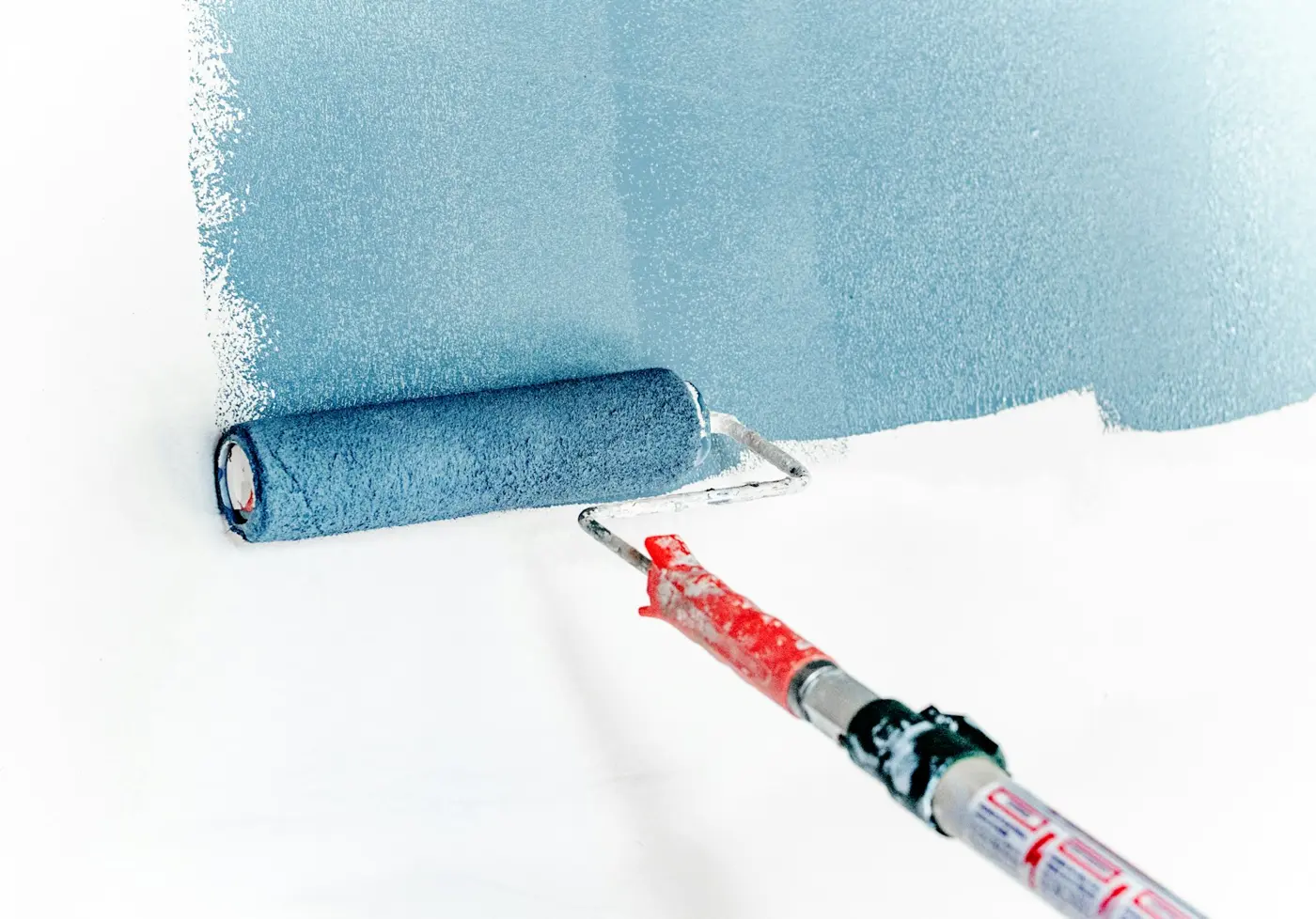
Edges along the ceiling, corners, and trim are cut in by hand with a brush, and the open wall areas are rolled. Most jobs get two finish coats for even color and good durability, with drying time between coats. Trim and doors are usually done last with a harder, glossier paint and a careful brush.
Smell, ventilation, and living at home
Most people stay home during interior painting. Modern water based paints have much less odor than paints from years ago, though there is still some smell while they dry. Opening a window or running a fan helps, weather permitting.
We try to plan the order of rooms around your routine, for example finishing bedrooms early in the day so they can air out before bedtime, or doing the kitchen when it is least in use. Tell us what matters to you and we will plan around it.
Cleanup and the final walkthrough
At the end of each day, tools are cleaned or stored, walkways are kept clear, and rooms are left safe. At the end of the job, drop cloths and plastic come up, tape comes off, outlet covers go back on, and furniture goes back to its place.
Then we walk the rooms together with you in good light. If you spot a thin area, a missed edge, or a mark on the trim, it gets touched up right then. This walkthrough is the moment to point out anything, big or small.
After the painters leave
Paint can feel dry to the touch within hours but takes longer to fully cure and harden. For the first couple of weeks, be gentle: avoid scrubbing walls, hanging heavy pictures right away, or pushing furniture tight against fresh paint.
Ask for any leftover paint to be labeled with the room and color and left with you. A small can of the exact color is the best tool for future touch ups.
How long the job takes
A single room with walls in good shape can often be finished in a day. Rooms that need patching, ceilings, and trim may take two or more, because patches need to dry before sanding and coats need to dry before the next one goes on. A full interior can take a week or longer depending on size.
Your estimate should give you a realistic time frame. If the schedule changes, for example because hidden damage shows up when old caulk comes off, a good painter tells you right away instead of letting you find out on the last day.
Frequently asked questions
- Do I need to move my furniture before the painters come?
- Usually you only need to remove small items, decorations, and fragile things. Large furniture is typically moved to the center of the room and covered. Mention anything very heavy or valuable at the estimate.
- Can I stay home while my house is being painted?
- Yes, most homeowners stay home. Modern water based paints have low odor, and the room order can be planned around your routine.
- How long does it take to paint a room?
- It depends on size, prep, and trim. A simple room can often be done in a day, while rooms needing patching, ceilings, and trim can take longer. Your estimate should give a time frame.
- Will painting make a lot of dust?
- Sanding patches makes some dust, but it is limited to the repaired areas and cleaned up before painting starts. Rolling and brushing paint does not create dust.
- How soon can I hang pictures after painting?
- It is best to wait at least a few days, and longer for heavy items, so the paint can harden. Full cure usually takes a couple of weeks.
Ready for an exact price?
Get a free, no-pressure in-home estimate. Real numbers for your home, not a phone guess.